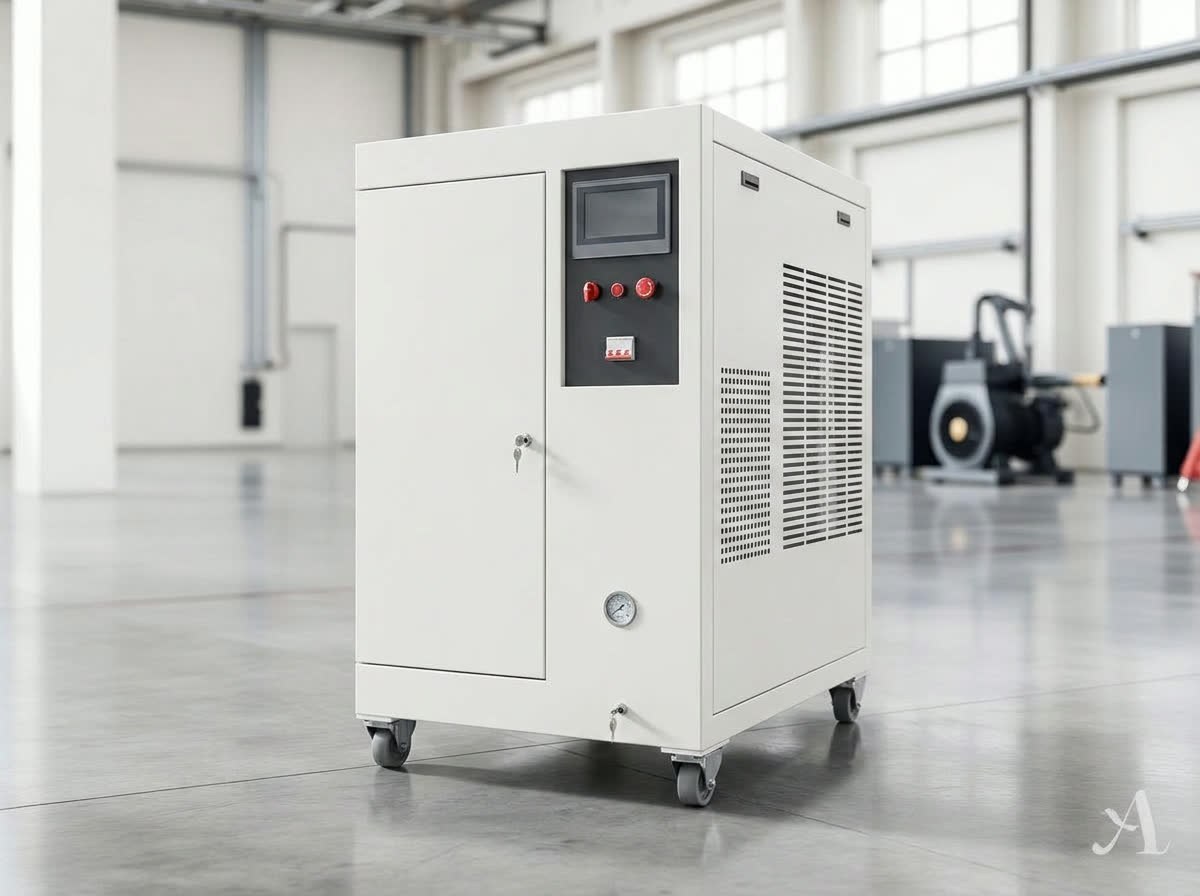
How does the Glasshouse Boiler Oxyhydrogen Generator work?
The unit splits demineralised water by electrolysis into oxyhydrogen and injects that gas into the combustion air of an existing boiler, furnace or kiln. The hydrogen fraction burns faster than the base fuel, which raises flame speed and completeness of combustion. Rated output is 6,000 L/h at 20 kW — 300 L/h per kW.
Is any hydrogen stored on site?
No. Gas is generated on demand and consumed as it is produced, so there is no stored-gas inventory, no bottled gas and no pressure vessel requiring separate gas-storage certification.
Do I have to replace my boiler or burner?
No. The generator is additive: it connects to the existing combustion air intake or a dedicated injection port through a non-return valve and flame arrestor, and the burner, controls and fuel train remain in place.
Which fuels is it compatible with?
Oxyhydrogen enhancement is applied to combustion systems firing natural gas, LPG, oil, coal and biomass. Fuel type and thermal duty determine frame sizing, so a specification review precedes every installation.
What utilities does the installation need?
A three-phase 380–480 V, 50/60 Hz supply through a local isolator, a demineralised or deionised feed-water connection, a drain, and a ventilated plant-room location within gas-line reach of the burner.
How is the installation carried out?
A local mechanical and electrical contractor completes the physical installation while YBG engineers guide commissioning remotely, including the burner interlock, leak testing and the before/after performance baseline.
What safety provisions are included?
The delivery line carries a non-return valve and flame arrestor, generator operation is interlocked to the burner so gas is only produced while firing, and an emergency stop shuts the unit down. Plant-room ventilation and commissioning must follow local combustion and plant regulations.
How is the Glasshouse Boiler Oxyhydrogen Generator sized against my thermal plant?
Sizing follows fuel type and thermal duty rather than nameplate alone. Use the Climate Systems sizing tool for a fuel-adjusted recommendation, or request an engineered specification for multi-unit and larger installations.
Can it run continuously?
Yes. The unit is rated for continuous 24/7 duty, which is the normal operating pattern for glasshouse heating and industrial process plant.
Can it be paired with water-side treatment?
Yes. For protected cropping, the climate side pairs with the HERO Irrigation Hydrogen Nano-bubble System on the water side; both can be specified together in one engagement, with the climate side quoted per installation.
Does YBG supply Climate Systems in the Netherlands and EU?
Yes. YBG Global supplies Climate Systems oxyhydrogen generators to the Netherlands and other EU countries. All three frames — the Glasshouse Boiler Oxyhydrogen Generator, the Process Boiler Oxyhydrogen Generator and the Industrial Oxyhydrogen Plant — are Price on Application, quoted per installation on DAP terms. Under DAP, import duties, VAT/GST and customs handling are payable by the consignee on arrival.
Does YBG supply Climate Systems in the United States?
Yes. YBG Global supplies Climate Systems oxyhydrogen generators to commercial greenhouse and thermal-plant operators in the United States and Canada. All three frames — the Glasshouse Boiler Oxyhydrogen Generator, the Process Boiler Oxyhydrogen Generator and the Industrial Oxyhydrogen Plant — are Price on Application, quoted per installation on DAP terms. Under DAP, import duties, VAT/GST and customs handling are payable by the consignee on arrival.
Does YBG supply Climate Systems in Australia?
Yes. Australia is YBG's home market. YBG Group International Limited is an Australian-registered entity with Sydney-based engineering roots, and YBG Global supplies Climate Systems oxyhydrogen generators directly within Australia. Domestic delivery and installation support are available without the international DDP/CIF framing used for other markets.