Industrial Hydrogenation Systems & Applications
Industrial hydrogenation is the deliberate introduction of molecular hydrogen into a working industrial process — a burner's combustion-air path, a pressurised water main, a wash or rinse line — so that hydrogen participates either in combustion chemistry or in the dissolved-gas state of the water. In every YBG Global system the hydrogen is electrolysed on demand at the point of use, so the site never carries a stored gas inventory.
In thermal systems the mechanism is combustion-side: hydrogen's flame speed and wide flammability range shorten ignition delay, tighten the flame front and improve burn completeness, which shows up as steam-side duty held at lower fuel input. In water systems the mechanism is physical rather than chemical: nano-scale hydrogen bubbles stay suspended and keep transferring dissolved hydrogen downstream, without additive, residual or pH shift. In processing, the same reducing, residual-free property is what makes hydrogen-charged water useful for cleaning, rinse conditioning and oxidation control.
We separate what is instrumented from what is not. Strongest evidence: combustion behaviour of hydrogen-enriched flames and the measured persistence of dissolved gas in nano-bubble form — both directly measurable at the plant. Moderate evidence: fleet-scale fuel and emissions outcomes, including 13% steam improvement and around 60% NOx reduction across an Indian biomass boiler fleet. Gaps: long-horizon plant-physiology and materials outcomes, which are operation-specific and which we do not generalise. Nothing on this page is a health or medical claim; the framing is engineering, and it is residency-neutral — identical mechanism, identical specification, wherever the plant sits.
Industrial hydrogenation injects on-demand hydrogen or oxyhydrogen into a plant's combustion-air path or water main. On the thermal side it improves burn completeness and lowers fuel input for the same duty; on the water side it holds dissolved hydrogen at nano-bubble scale with no additive and no residual. YBG Global delivers both: oxyhydrogen generators from 6,000 L/h for boiler duty, and a 20 L/min inline hydrogen nano-bubble system at 3,000–5,000 ppb for water duty.
Industrial thermal hydrogenation
Thermal hydrogenation means injecting oxyhydrogen into the combustion-air path of a burner that already works. Hydrogen has a far higher flame speed and a much wider flammability range than the primary fuel, so a small enriching fraction shortens ignition delay and tightens the flame front. Burn completeness improves; unburnt carbon falls.
Nothing upstream is replaced. The boiler, the burner, the fuel train and the control loop stay as designed, and generation is interlocked to plant state so gas is produced only at the rate the burner consumes it. Because the oxyhydrogen is electrolysed on demand, the site never holds a hydrogen inventory.
Duty is set by gas output, not by badge power: yield runs at approximately 300 L/h of oxyhydrogen per kW of rated input, from 6,000 L/h on glasshouse-scale units up through process and industrial plant classes. Multi-unit arrays are specified per installation because injection geometry and interlocks are site-specific.
Industrial water hydrogenation
Water-side hydrogenation dissolves molecular hydrogen into a pressurised line at nano-bubble scale. The treatment changes the dissolved-gas state of the water and nothing else — no additive, no residual, no pH shift, no contact-time window to manage.
Sub-micron bubbles resist coalescence and buoyant escape, so they remain suspended and continue transferring hydrogen well downstream of the injection point. On the HERO Irrigation system this holds 3,000–5,000 ppb dissolved hydrogen (sensor-verified) at 20 L/min inline output, at 99.99% hydrogen purity from PEM/SPE electrolysis.
Inline hydrogenation retrofits to existing mains: a stainless cabinet, a grounded single-phase supply and a tee into the pressurised line. Driplines, emitters, dosing skids and control computers are untouched, which is what makes it viable on operating sites rather than only on new build.
Hydrogenation in manufacturing and processing
Where a wash, rinse or conditioning step must not add an oxidant, hydrogen-charged water is the useful modality: it carries a reducing dissolved gas and leaves no chemical residual on the surface or in the effluent.
That property drives three families of processing application — surface and equipment cleaning where residual chemistry is a problem, rinse-water conditioning where dissolved-gas state matters more than additive dosing, and oxidation control on process water where the objective is to avoid introducing oxidative load in the first place.
These are specified case by case against water quality, flow rate and material compatibility. We do not publish generalised process outcomes for materials work: it is operation-specific, and the honest position is that this is an engineering study rather than a catalogue claim.
Hydrogenation versus traditional oxygenation
Nanobubble equipment across the market shares one physics: sub-micron gas bubbles with very high interfacial area that stay suspended instead of rising out. What differs — and what determines the engineering consequences — is which gas is dissolved.
Air and oxygen nanobubbles raise dissolved oxygen, which suits aeration, biological loading and dissolved-oxygen deficits. Ozone nanobubbles introduce a strong oxidant with a short half-life: powerful for disinfection duty, but it brings oxidative residual, material-compatibility limits and contact-time control with it.
Hydrogen is the reducing modality. It introduces no oxidant, leaves no residual, needs no contact-time management, and it is the only one of the four that can run continuously inline on a distribution main without an oxidative load budget. That is why YBG Global engineers hydrogen nano-bubble systems rather than ozone or air systems — a mechanism decision, stated as a mechanism rather than a claim about outcomes.
Systems that deliver industrial hydrogenation
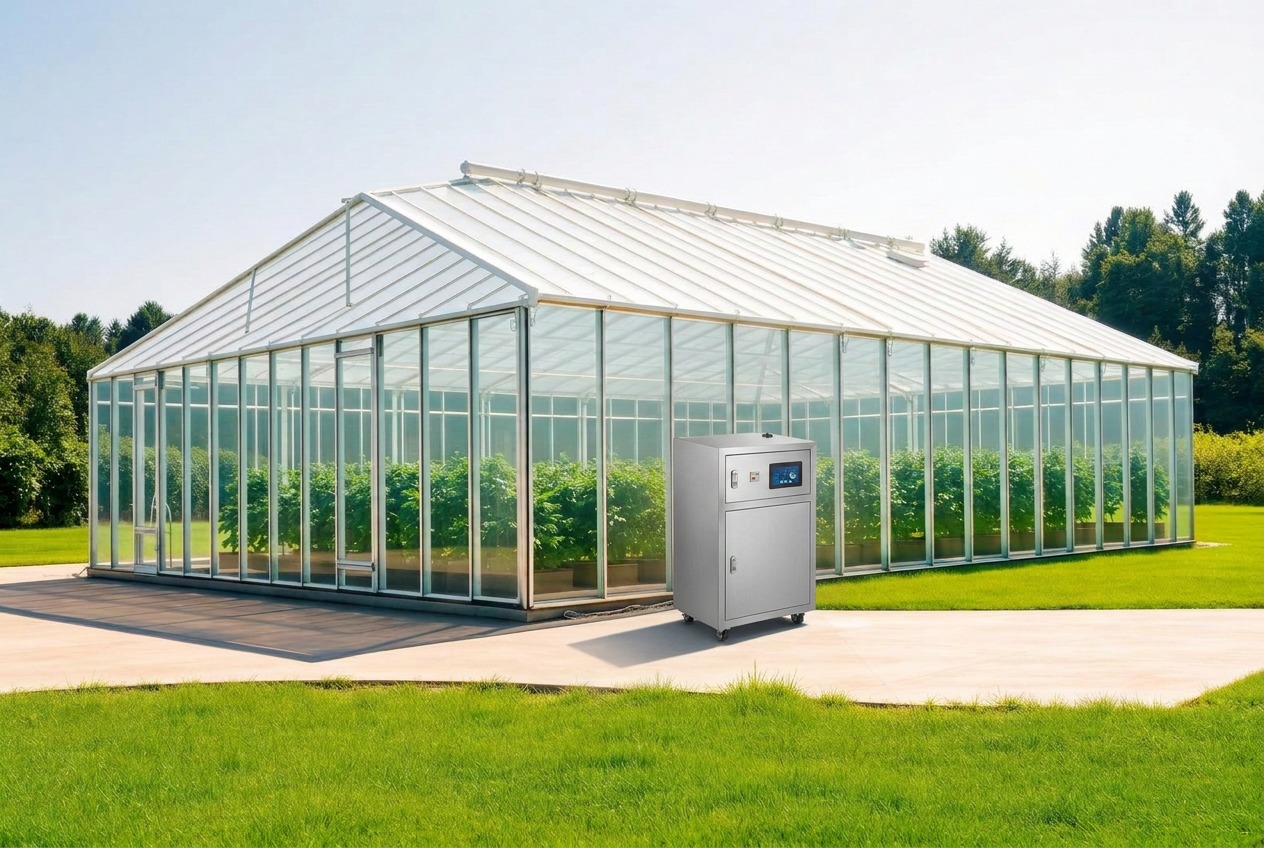
Hydrogen Nano-bubble System (WZ-S)
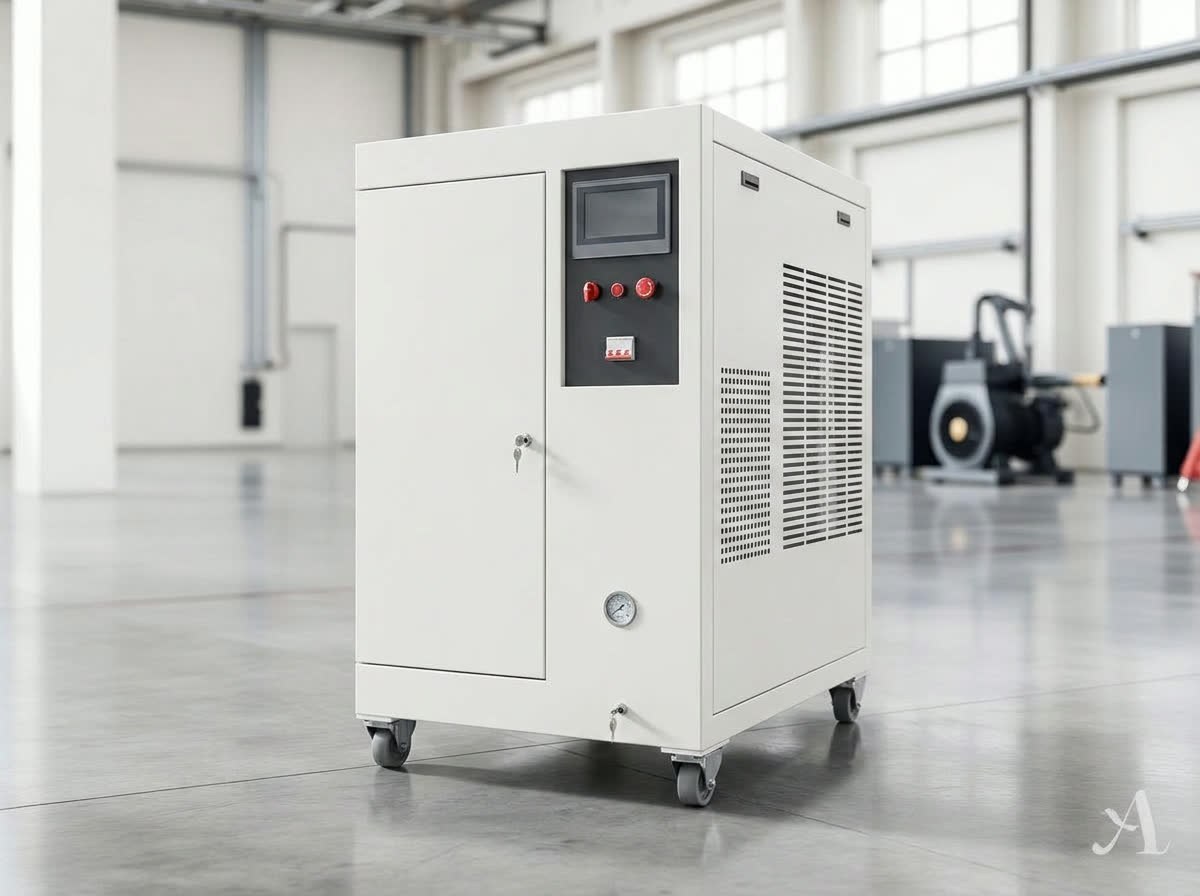
Glasshouse Boiler Oxyhydrogen Generator
Climate cluster
Industrial hydrogenation — common questions
What is industrial hydrogenation?
How is hydrogen used in industrial thermal systems?
What is oxyhydrogen technology?
How does hydrogenation support water treatment?
Is hydrogenation compatible with industrial boilers?
What are the benefits of hydrogen nano-bubbles in industrial water?
How does hydrogen nano-bubble treatment differ from oxygen, air or ozone nanobubbles?
Does hydrogenation apply to manufacturing and processing lines?
Is hydrogen stored on site?
What evidence supports industrial hydrogenation?
Which YBG Global systems deliver industrial hydrogenation?
How is an industrial hydrogenation project specified?
For an engineered specification against your own duty, request a specification, or start from the sizing tool and the documentation library.